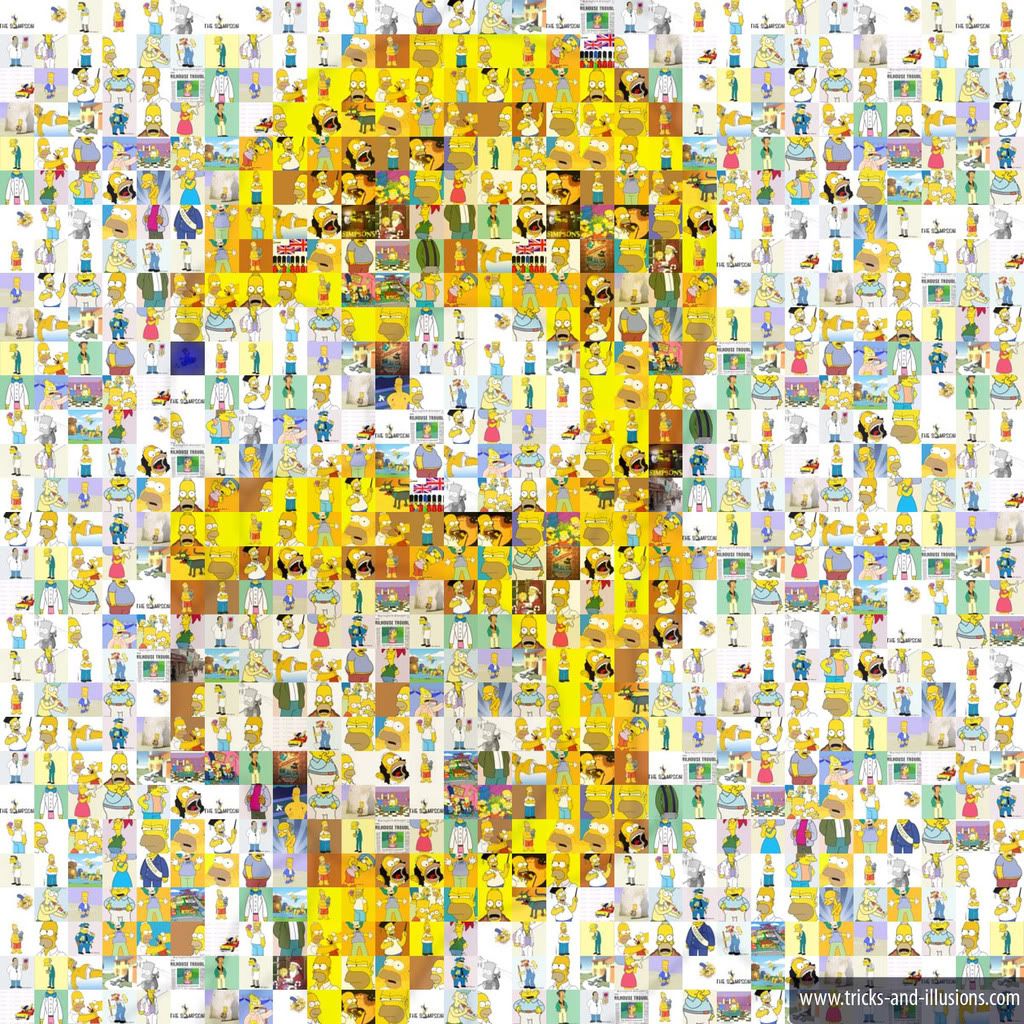
This picture of Homer Simpson surrounded by many other smaller pictures is similar to many mosaics of great people, including Babe Ruth like Livingstone showed, and shows how our peripheral vision (with low resolution) and central visions (with high resolution and more detail paid attention to the center) work to perceive the individual snapshots separately from the bigger, macro portrait of Homer.
Closely related to this is the idea of optical illusions, and somewhat related to the 3-D images that Livingstone discussed. The way we perceive the colors and depth of these dice is different depending on what angle we look at them from, the colors used, in this case, the stark contrast of black and white, the background they are on, and the shadow it creates. We saw examples of these illusions in class as well, and some are more abstract with just colors and shapes, where others can be actual objects that deceive us. With color illusions, what we see is more an illusion of motion, while with objects such as the dice, the illusion is one of depth and 3-D.



No comments:
Post a Comment